At the NSLC on Medicine & Health Care, you’ll explore the work of medical professionals as you practice surgical skills, collaborate with your medical team to diagnose patients, and investigate the challenges shaping modern health care. Discover how science, communication, and compassion come together in clinical practice as you work through patient care scenarios and consider the decisions physicians make when diagnosing and treating patients.
High School Summer Medical Program
Examine a career in medicine.
Program Highlights
Inside Medicine at NSLC
Explore medicine and clinical care firsthand this summer. NSLC pre-college programs combine academic learning with real-world opportunities, giving you the experience and perspective to make more confident decisions about college and your future career.
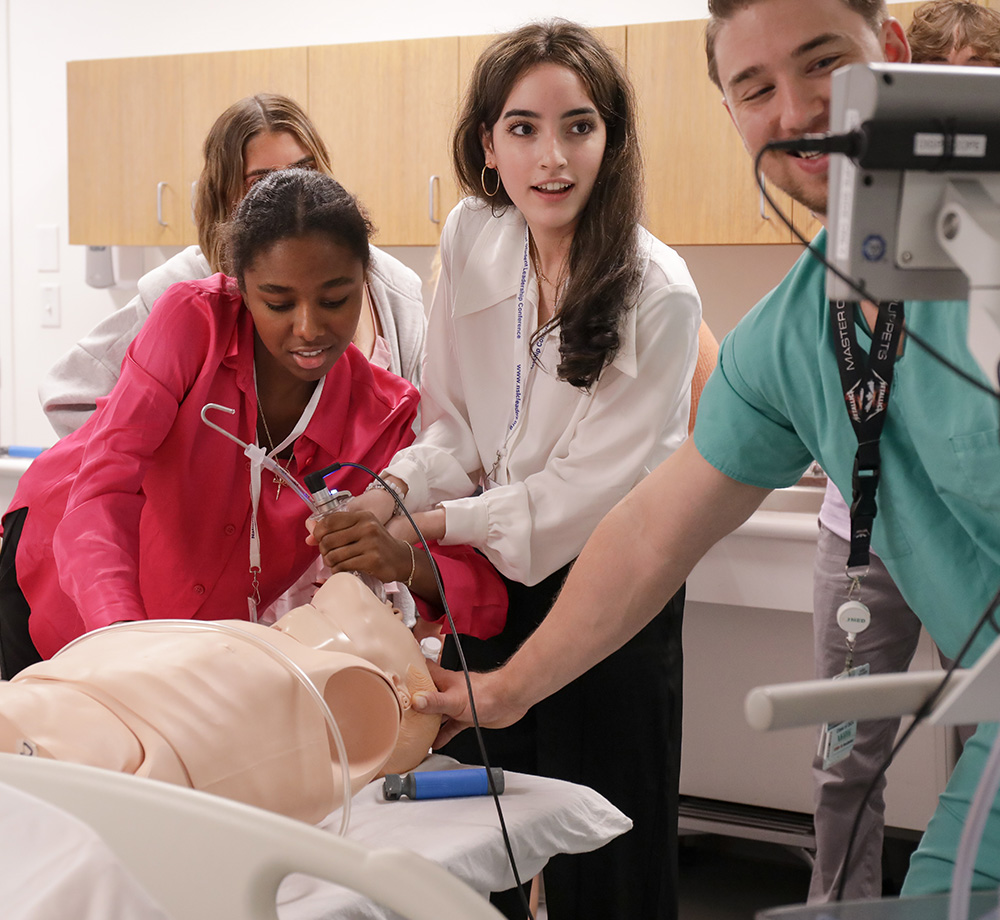
Explore through hands-on learning.
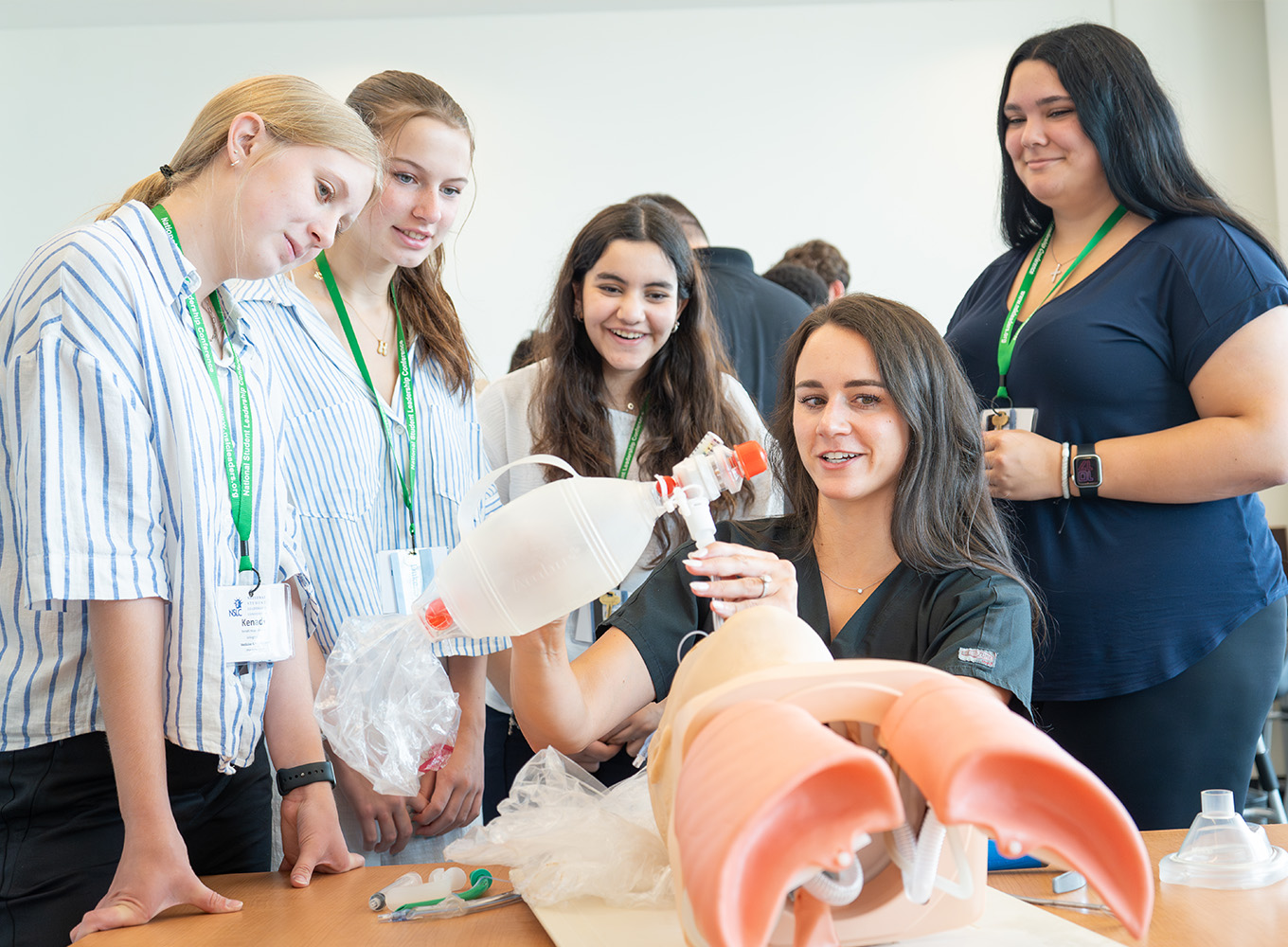
Develop the skills and knowledge you need for a future career in medicine with experiential simulations.
Explore SimulationsLearn from the experts.
Get real-world perspectives and insider knowledge straight from the professionals.
Explore Guest Speakers

Go behind the scenes.
Discover the inner workings of the field through immersive trips and tours.
Explore Trips & ToursI will never forget the wonderful memories I experienced with my new friends. I loved everything about the program and learned a lot more about medicine.
Estelle, Georgia
Hands-on Simulations
Explore medicine and health care
through immersive workshops that reveal how innovation, ethics, and empathy shape the way physicians approach patient care. Gain exposure to real-world medical practices as you explore the connections between science, diagnostics, and decision-making in clinical settings. Experience how collaboration and communication guide every step of patient care, from examination to treatment.
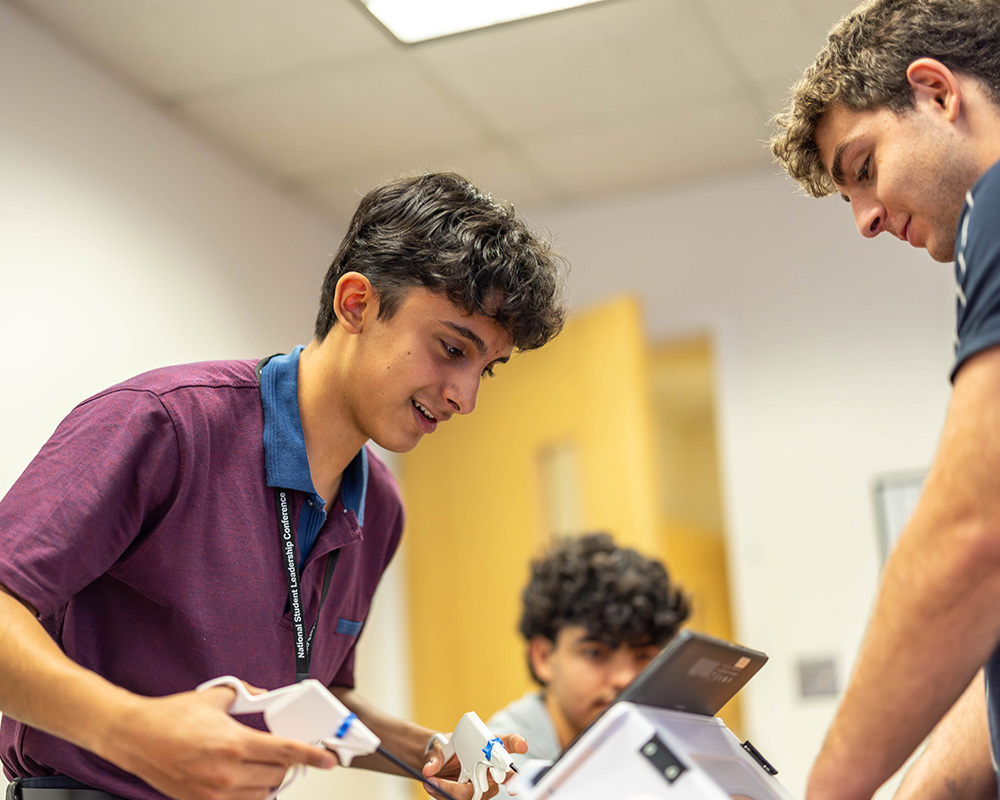
Surgical Skills
Gain the hands-on knowledge essential for a career in medicine including suturing, surgical knot tying, and an understanding of internal anatomy.
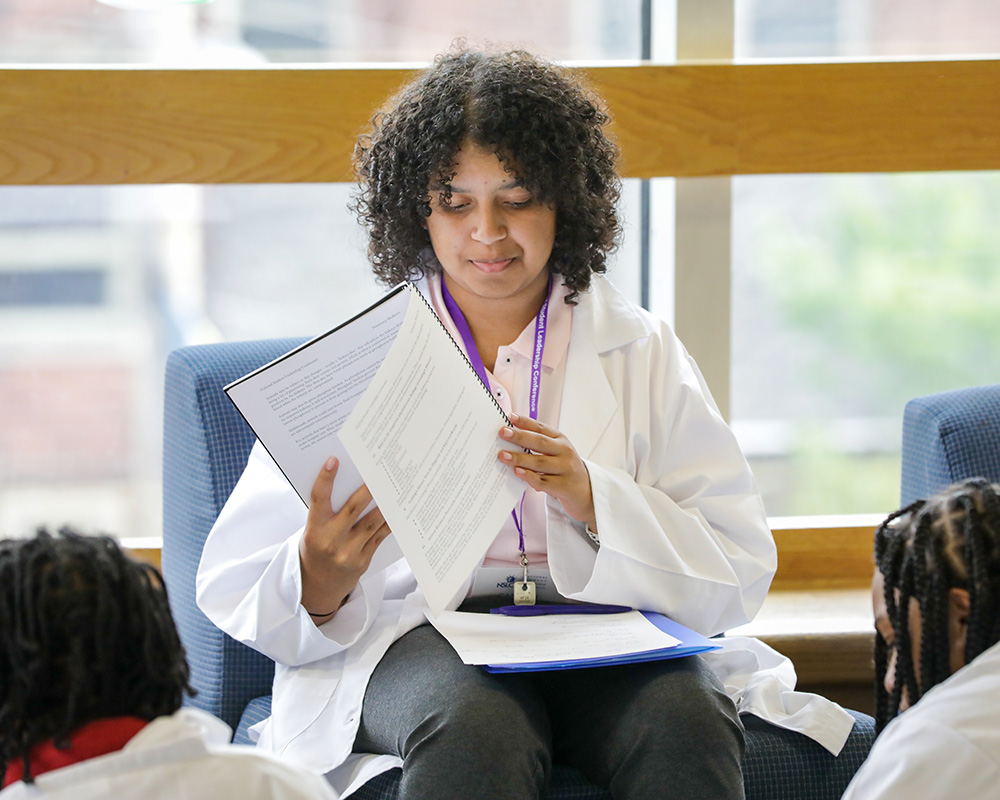
Clinical Diagnostics
Practice patient care by interviewing, diagnosing, testing, and treating patients with your clinical teams throughout a multi-day simulation.
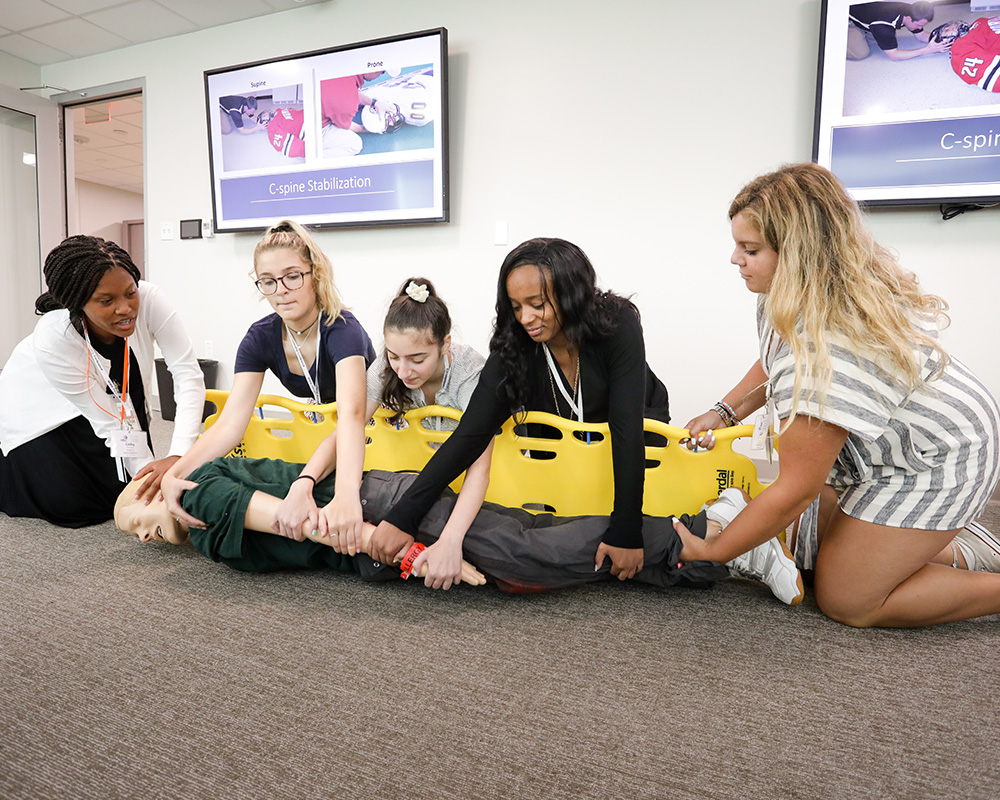
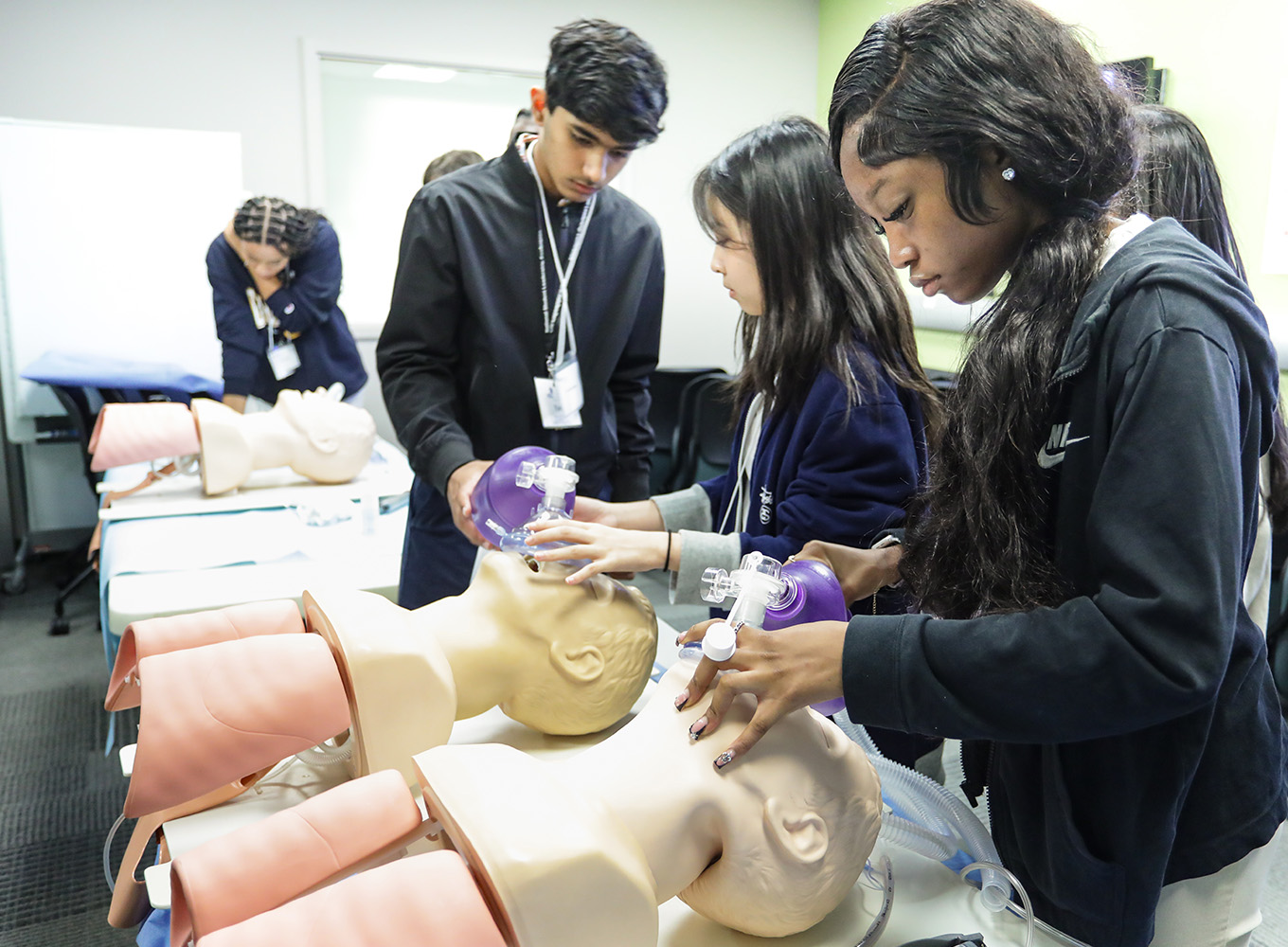
Emergency Medicine
Handle critical medical situations by learning the steps of a trauma assessment and responding in real time to simulated scenarios.
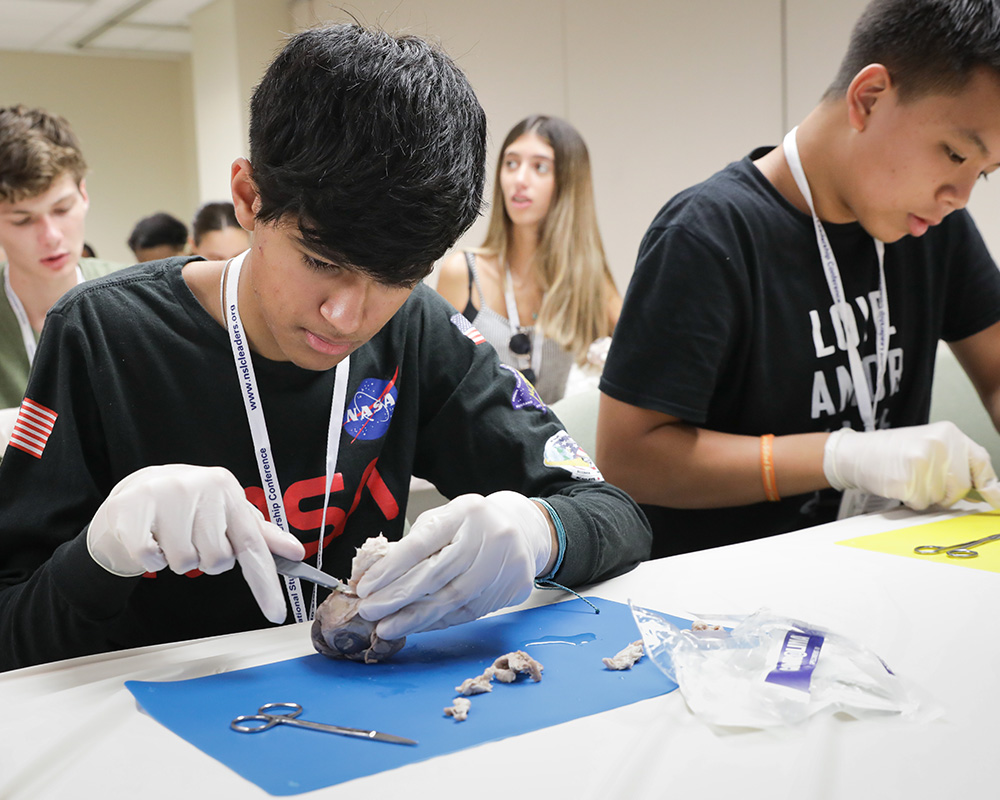
Anatomy Workshops
Learn about internal bodily structures through dissections of eyes, brains, hearts, and spinal cords, better understanding the functions of each organ.
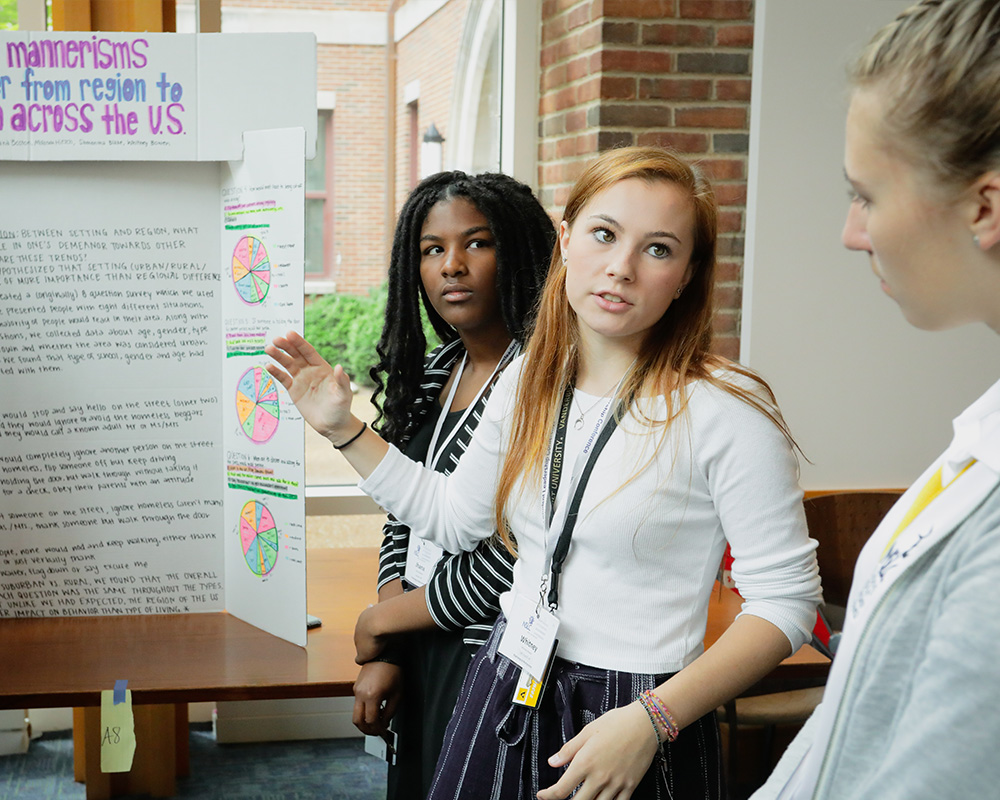
Public Health Campaign
Bring awareness to an issue affecting the community by collaborating on a public service announcement and intervention plan with your team.
Guest Speakers
Gain expert insights.
Interact with guest speakers from a variety of backgrounds that bring practical knowledge and real-world experiences to the Medicine & Health Care program.
See Past Guest Speakers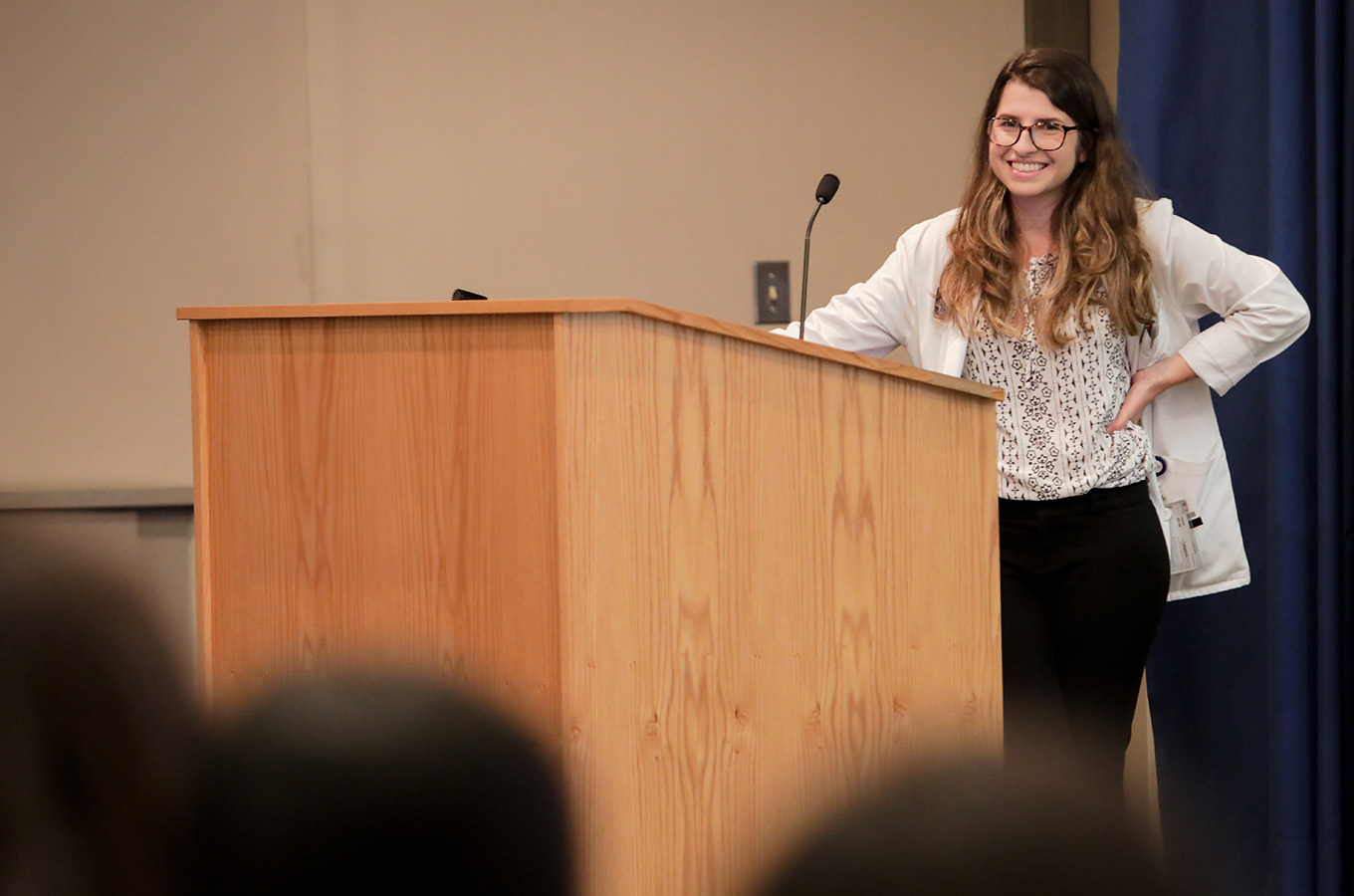
Kanbar Simulation Center at UCSF
Duke Human Simulation & Patient Safety Center
J. David Gladstone Institute

Oakland University Prosthetics and Orthotics Center
Trips & Tours
Go beyond the classroom.
Gain a new perspective on medicine through field trips that uncover how the industry works behind the scenes. A mix of educational and sightseeing tours allow you to explore the city surrounding the university.
See Trips by Location
Leadership
is in our name.
Each NSLC program contains a leadership curriculum designed to teach skills that can apply to all areas of life. Workshops on personality styles, communication and listening, resilience, and empathy set the foundation for a successful future, no matter where it may lead.
Watch VideoLife on a College Campus
Dates, Locations, & Tuition
NSLC provides an immersive pre-college experience that prepares students for life beyond high school, allowing them to study in university classrooms, learn to navigate a campus, and experience college life firsthand. When submitting an application, students will select a residential or commuter option: residential students stay on campus in supervised dormitories, while commuter students follow daily arrival and departure times designated by their chosen location.
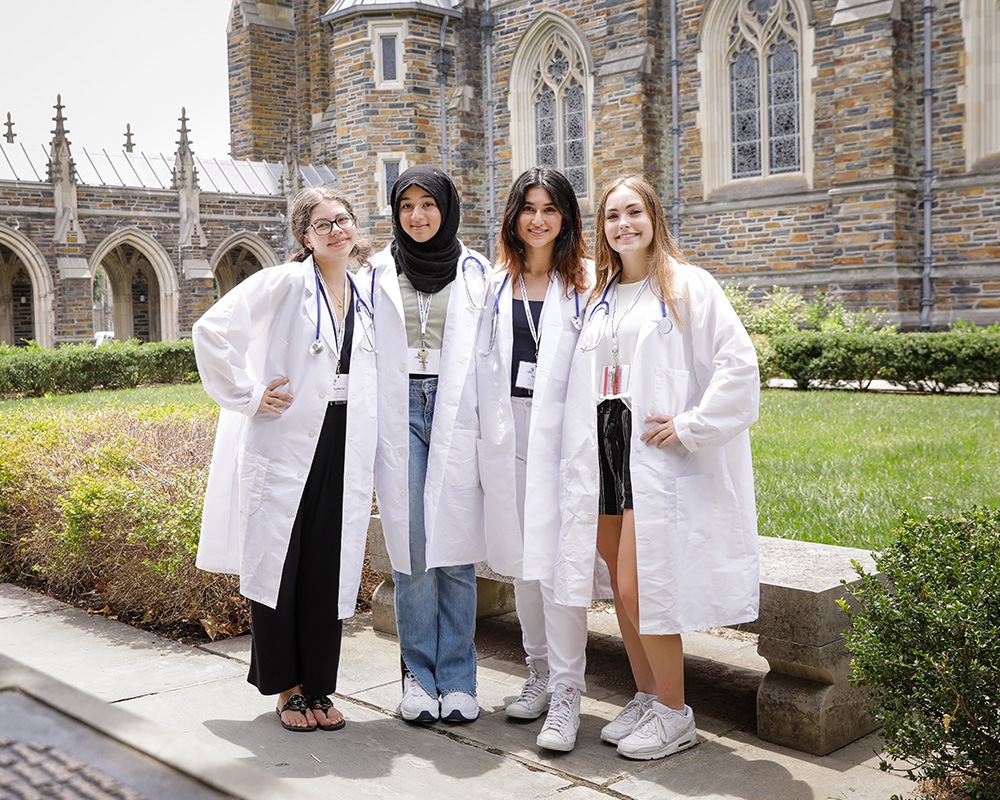

Columbia University*
New York, NY
$4,895 Residential
$4,045 Commuter
Summer 2027
Jun 24 - Jul 2
Jul 6 - Jul 14
Jul 18 - Jul 26
Duke University**
Durham, NC
$4,595 Residential
$4,100 Commuter
Summer 2027
Jun 24 - Jul 2
Jul 6 - Jul 14
Jul 18 - Jul 26
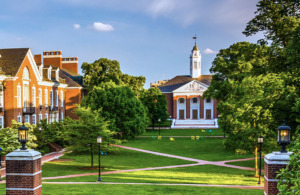
Johns Hopkins University°
Baltimore, MD
$4,595 Residential
$3,845 Commuter
Summer 2027
Jul 10 - Jul 18
Jul 22 - Jul 30
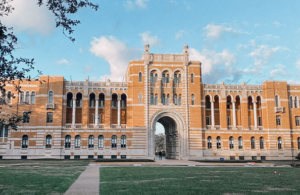
Rice University△
Houston, TX
$4,495 Residential
$3,945 Commuter
Summer 2027
Jun 13 - Jun 21
Jun 26 - Jul 4
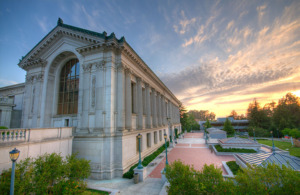
University of California, Berkeley
San Francisco, CA
$4,595 Residential
$3,845 Commuter
Summer 2027
Jun 13 - Jun 21
Jun 25 - Jul 3
Jul 7 - Jul 15
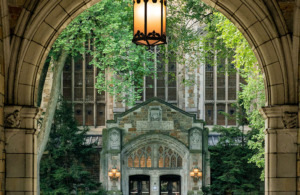
University of Michigan
Ann Arbor, MI
$4,495 Residential
$4,000 Commuter
Summer 2027
Jun 25 - Jul 3
Jul 8 - Jul 16

University of Oxford†
Oxford, England
$6,895 Residential
Summer 2027
Jun 27 - Jul 8
Jul 12 - Jul 23
Jul 27 - Aug 7
Sessions at Oxford are 12 days.
* NSLC is not affiliated with, endorsed by, or sponsored by Columbia University.
** The NSLC is not affiliated with Duke University, nor is the NSLC a Duke University program or activity.
° The NSLC is not related to or affiliated with Johns Hopkins University (JHU) in any way. NSLC is an entirely separate entity with no connection to JHU aside from the temporary rental of facilities for the program.
△ The NSLC is not sponsored by William Marsh Rice University.
† NSLC and OSP are not part of the University of Oxford and are not authorized, approved, endorsed or otherwise associated with the University of Oxford. NSLC and OSP hire University of Oxford facilities during the summer and contract with colleges of the University of Oxford to provide accommodation and use of facilities only.
Tuition Resources

Earn College Credit
NSLC has partnered with American University to offer an online college credit opportunity for students across all our programs and locations. AU’s faculty-taught courses are completed at home outside the dates of your program and tailored to complement your area of study.
Learn MoreRelated Programs
Students interested in Medicine & Health Care also expressed interest in these programs.

Medicine FAQs
Frequently Asked Questions
Wondering if NSLC’s Medicine & Health Care program is right for you? Explore below, read our general FAQs, or reach out to our team. We’re happy to help!
You don’t need previous medical training or advanced science classes to begin exploring health care. An interest in biology, helping people, or understanding how the human body works is a good starting point. At NSLC, you’ll be introduced to medical concepts through hands-on activities that help you discover what studying and practicing medicine can involve.
All three programs explore aspects of human health and well-being, but they approach the subject differently. Medicine & Health Care focuses on medical science, clinical reasoning, and the work involved in diagnosing and treating patients. Nursing explores patient care, clinical decision-making, and the nurse’s role on a health care team. Psychology & Neuroscience examines human behavior, thoughts, and emotions, helping students understand how people think and respond to the world around them. The best choice depends on which questions about human health interest you most.
There are many ways to work in health care without becoming a physician. Physician assistants and nurse practitioners provide patient care, while physical therapists help people improve movement and recover from injuries. Other professionals work in medical imaging, laboratory science, public health, or health care research. Exploring medicine can introduce you to the different skills and responsibilities involved in caring for patients and improving health.
No! Biology is a common choice for students interested in medical school, but it’s not the only option. Medical schools generally accept students from a wide range of undergraduate majors, provided they complete the required prerequisite courses and meet other admissions requirements. You could major in chemistry, psychology, public health, or even a subject outside the sciences. What’s important is building a strong academic foundation while exploring subjects that genuinely interest you.
Science is essential to medicine, but understanding biology and anatomy is only part of the job. Doctors also need to listen carefully, explain complicated information, work with other health care professionals, and make decisions when the answers aren’t obvious. Being comfortable with uncertainty and treating patients with empathy are important parts of medical practice, too.
If you’re curious about how the body works, enjoy solving problems, and want to understand how medical professionals help patients, medicine may be worth exploring. It’s also useful to think about whether you enjoy communicating with people and working through situations where the right answer isn’t immediately clear. At NSLC, you’ll encounter medical concepts and clinical challenges that can help you discover which parts of health care interest you, and whether you’d like to explore the field further.
Your future starts here.
Join our mailing list to get a brochure and stay in touch.