At the NSLC on International Law & Politics, you’ll investigate how governments, international organizations, and legal systems shape relationships between nations. Explore the connections between political theory, international law, and real-world policy as you examine global challenges and competing national interests. Through negotiation challenges, mock parliamentary sessions, and collaborative exercises, discover how political leaders and international institutions navigate conflict, build cooperation, and make decisions that affect people around the world.
High School Summer Law Program Abroad
Explore a career in international politics.

Official Program Partner
OSP Scholars
NSLC is proud to partner with OSP Scholars and the world-renowned professors of the University of Oxford.
Program Highlights
Inside International Law & Politics at NSLC
Explore international law and global politics firsthand this summer. NSLC pre-college programs combine academic learning with real-world opportunities, giving you the experience and perspective to make more confident decisions about college and your future career.

Explore through hands-on learning.
Develop the skills and knowledge you need for a future career in law with experiential simulations.
Explore SimulationsLearn from the experts.
Get real-world perspectives and insider knowledge straight from the professionals.
Explore Guest Speakers

Go behind the scenes.
Discover the inner workings of the field through immersive trips and tours.
Explore Trips & ToursIt was a life-changing experience that taught me so much about myself and the diverse world of politics.
Grant, Arizona
Hands-on Simulations
Explore international law and politics
through immersive workshops that blend legal reasoning, debate, and diplomacy. Step into the role of a delegate, policymaker, or advocate as you collaborate with peers to draft resolutions, negotiate treaties, and present arguments before international bodies. Explore how global issues ranging from human rights to environmental policy are shaped by the intersection of law, leadership, and international cooperation.

Philosophy & Politics
Explore how political philosophies shape modern ideologies, government policies, and global conflicts through competing ideas about justice, liberty, and power.

UN Security Council Simulation
Step into the role of a UN Security Council delegate as you represent your nation's interests, debate pressing international issues, and negotiate with fellow delegates to develop resolutions addressing global challenges.

Legislative Process
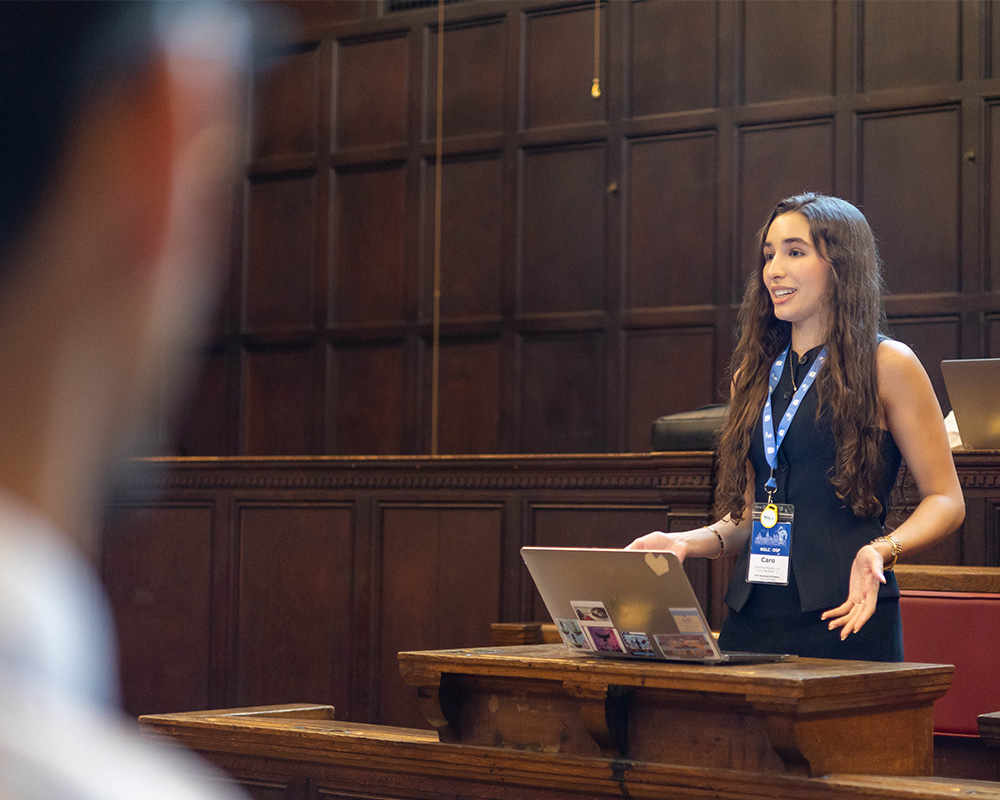
Participate in practical exercises like mock parliamentary sessions to understand public policy development and legislative procedure.
Negotiation Challenge
Put your negotiation skills to the test as you trade resources, form strategic alliances, and navigate secret agendas in a fast-paced competition where nobody can win alone.

Control the Narrative
Investigate suspicious headlines and conflicting intelligence as you work to separate fact from fiction, recognize propaganda, and determine how to respond to an unfolding international crisis.
Guest Speakers
Gain expert insights.
Interact with guest speakers from a variety of backgrounds that bring practical knowledge and real-world experiences to the International Law & Politics program.
See Past Guest Speakers

Houses of Parliament, Westminster Palace

Royal Courts of Justice
Trips & Tours
Go beyond the classroom.
Gain a new perspective on the legal profession through field trips that uncover how the industry works behind the scenes. A mix of educational and sightseeing tours allow you to explore the city surrounding the university.
See Trips by Location
Leadership
is in our name.
Each NSLC program contains a leadership curriculum designed to teach skills that can apply to all areas of life. Workshops on personality styles, communication and listening, resilience, and empathy set the foundation for a successful future, no matter where it may lead.
Watch VideoLife on a College Campus
Dates, Locations, & Tuition
NSLC provides an immersive pre-college experience that prepares students for life beyond high school, allowing them to study in university classrooms, learn to navigate a campus, and experience college life firsthand. When submitting an application, students will select a residential or commuter option: residential students stay on campus in supervised dormitories, while commuter students follow daily arrival and departure times designated by their chosen location.


University of Oxford†
Oxford, England
$6,695 Residential
Summer 2027
Jun 27 - Jul 8
Jul 12 - Jul 23
Jul 27 - Aug 7
Sessions at Oxford are 12 days.
† NSLC and OSP are not part of the University of Oxford and are not authorized, approved, endorsed or otherwise associated with the University of Oxford. NSLC and OSP hire University of Oxford facilities during the summer and contract with colleges of the University of Oxford to provide accommodation and use of facilities only.
Tuition Resources

Earn College Credit
NSLC has partnered with American University to offer an online college credit opportunity for students across all our programs and locations. AU’s faculty-taught courses are completed at home outside the dates of your program and tailored to complement your area of study.
Learn MoreRelated Programs
Students interested in International Law & Politics also expressed interest in these programs.


International Law FAQs
Frequently Asked Questions
Wondering if NSLC’s International Law & Politics program is right for you? Explore below, read our general FAQs, or reach out to our team. We’re happy to help!
International law is a set of rules and principles that govern relationships between countries and other international actors. It addresses issues such as human rights, international trade, armed conflict, and environmental protection. Unlike laws within a single country, international law often depends on treaties, international agreements, and cooperation between governments. Studying how these rules are created, interpreted, and enforced can help you understand both the possibilities and challenges of international cooperation.
International lawyers work on legal issues that cross national borders, including trade agreements, human rights, international disputes, and treaties. Depending on their specialty, they may advise governments, represent organizations or businesses, conduct legal research, or help resolve conflicts involving different legal systems. Some work in private law firms, while others pursue careers in government, international organizations, or nonprofit advocacy. The profession combines legal reasoning with an understanding of different countries, cultures, and political systems.
International law establishes rules and agreements that shape how countries interact, while politics influences how those rules are negotiated, interpreted, and followed. Governments must balance national interests with international obligations, especially when addressing issues such as security, human rights, and climate change. At NSLC, you’ll explore these connections through activities involving political philosophy, government institutions, legal reasoning, and international cooperation. You’ll see how political decisions and legal principles influence one another.
International relations, political science, history, economics, and philosophy can all provide useful foundations for studying international law. If you want to become a lawyer in the United States, you’ll generally need to earn a bachelor’s degree, complete law school, and meet licensing requirements. Law schools don’t require a specific undergraduate major, so you can choose a subject that interests you while developing your research, writing, and analytical skills. Exploring international law during high school can help you discover which academic path appeals to you most.
Studying international law and politics can prepare you to explore careers in legal practice, government, diplomacy, public policy, international organizations, and advocacy. International lawyers may work on cross-border legal matters, while policy analysts research issues that influence government decisions. Other professionals focus on human rights, international development, treaty negotiations, or conflict resolution. These careers have different educational requirements, but understanding the relationship between law and politics can help you identify which kinds of work interest you.
International law addresses issues that extend beyond national borders, including human rights, trade, armed conflict, environmental protection, and maritime boundaries. Different areas of international law establish rules for how governments and other international actors interact. For example, international humanitarian law governs conduct during armed conflict, while international trade law addresses commercial relationships between countries. Studying these areas can help you discover which legal and political questions interest you most.
Your future starts here.
Join our mailing list to get a brochure and stay in touch.